
Brisbane's weather doesn't do things by halves. One afternoon it's 35 degrees and dry, the next there's a hailstorm rolling through or a flash flood turning a low-lying street into a hazard zone. A proper car gear checklist isn't just a nice-to-have for Brisbane drivers, it's what stands between a manageable roadside hiccup and being genuinely stuck with no options. And when the situation goes beyond what a roadside kit can fix, knowing how to reach a suitable tow truck in Brisbane quickly makes all the difference.
Why A Car Gear Checklist Matters More In Queensland
Most car emergency guides are written with a generic climate in mind, which doesn't really reflect what Brisbane drivers actually deal with. There's no snow or ice to plan around here, but there is genuine, punishing heat for months at a time, sudden and severe storm activity, and flash flooding that can turn a short trip into a real problem within minutes. A car gear checklist built for these conditions looks a little different to one built for a cooler climate, with more emphasis on heat management, visibility during storms, and staying safe if you're stopped somewhere exposed while waiting for help.
It's also worth remembering that Queensland's more remote stretches, whether that's heading out toward the Scenic Rim, into the hinterland, or further north along the coast, can leave you without mobile signal or nearby assistance for longer than city driving would suggest. A checklist that only accounts for a quick call to roadside assistance from a busy street doesn't hold up once you're out of range.
Tyre and Mechanical Basics Worth Carrying
A properly inflated spare tyre is the foundation of most roadside preparedness, but it's only useful if it's actually been checked recently rather than assumed to be fine because it's sitting in the boot. Alongside the spare, a jack and wheel brace rated for your specific vehicle matter more than people expect, since a mismatched or worn jack can turn a five-minute tyre change into a much longer, riskier job. A tyre pressure gauge is genuinely useful in Brisbane's climate, since the swing between a cool morning and a scorching afternoon affects tyre pressure more than most drivers realise, and running on the wrong pressure increases blowout risk on longer drives. Jumper cables or, better still, a portable jump starter pack round out the mechanical basics, giving you a way to deal with a flat battery without needing to flag down a stranger or wait for assistance to arrive.
Explore our helpful resources also:
Storm Damaged Car In Brisbane And It Won't Move
20ft vs 40ft Container Transport: Equipment And Truck Requirements
How To Tow A Camper Trailer Safely On Brisbane Roads And Highways
Agricultural Machinery Transport Challenges And How BTS Manages Them
10 Things People Forget Before Booking A Storage Container Towing
Weather and Visibility Gear for Brisbane Conditions
Given how quickly weather can turn here, visibility gear deserves its own place in the boot rather than being an afterthought. A reliable torch with spare batteries is essential, particularly if a breakdown happens after dark or during a storm that's knocked out street lighting. A reflective safety triangle or hazard warning device helps other drivers see you well before they're close enough for it to matter, which is especially important if you're stopped on a motorway shoulder or a poorly lit stretch of road. A basic tarp or cover is more versatile than it sounds, useful for shielding the car from sudden hail, keeping rain off an open bonnet while you work, or providing some shade if you're stuck waiting in the heat. Sunglasses and a hat round this category out, since glare on Brisbane's open roads and highways is a genuine hazard, not just a comfort issue.
Safety And Emergency Essentials
A first aid kit only helps if it's actually stocked properly, rather than being the small sticker-labelled box that came pre-packed years ago and has never been checked since. Bandages, antiseptic, pain relief, and any personal medication should all be current and easy to find under pressure. Drinking water matters more than people think, especially for longer drives heading out of the city where help might be further away and the heat more intense. A fully charged phone charger or power bank is one of the simplest things to forget and one of the most important to have, since a dead phone during a breakdown removes your fastest way of getting help. A basic tool kit covering the fasteners and fittings specific to your vehicle rounds out the essentials, giving you the ability to handle small fixes without needing to wait for assistance for something minor.
Keeping Documentation On Hand
It's easy to overlook, but having your roadside assistance details or a trusted towing provider's number already saved in your phone saves precious time when something actually goes wrong. The same goes for your vehicle registration and insurance details, which are far more useful sitting somewhere accessible than buried at the bottom of the glovebox under old receipts. When a situation is already stressful, not having to search for basic paperwork makes a real difference to how smoothly it's resolved.
Checking And Maintaining Your Gear
A checklist only works if it's actually checked. Batteries corrode, tyres lose pressure, and first aid supplies expire, often without anyone noticing until the exact moment they're needed most. Building a habit of reviewing this gear every three to four months, and particularly before storm season or a longer road trip, keeps it genuinely useful rather than something that's technically in the boot but quietly useless. It's a small habit that costs almost nothing but pays off significantly the one time it actually matters.
When To Call A Tow Truck
Even the best-prepared car gear checklist has its limits, and knowing where those limits sit is just as important as the gear itself. If the vehicle won't start after a genuine jump attempt, that's usually a sign of something beyond a flat battery, and continuing to try can drain what little charge remains or mask a bigger electrical issue. Visible fluid leaking from the engine or transmission is another clear signal to stop and call for towing rather than attempting to drive further, since continuing on a leak often turns a moderate repair into a much larger one. A warning light indicating a serious mechanical issue, rather than something routine like a service reminder, should also be treated as a reason to stop rather than push through.
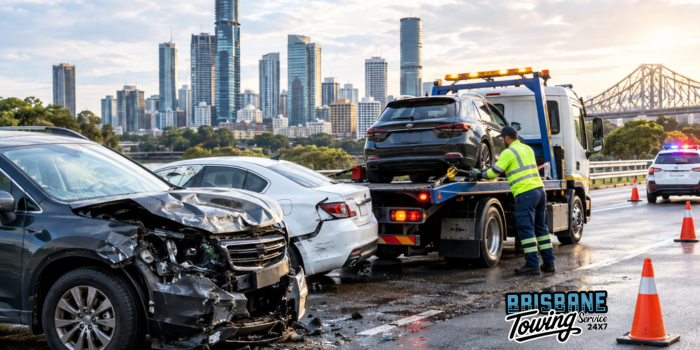
Any kind of collision, even a minor one, is worth having assessed by a tow operator and a mechanic rather than assuming the car is fine to drive simply because it still starts. Structural or mechanical damage isn't always visible from the driver's seat. Flood or storm-affected vehicles fall into a similar category, since water damage to electronics and engine components isn't always obvious just from looking at the car, and driving it before it's been properly checked risks turning a fixable situation into a written-off one.
Location matters here too. If you've broken down somewhere with limited visibility, on a motorway shoulder, or anywhere that genuinely doesn't feel safe to be working on the vehicle yourself, that's a clear signal to call for professional towing rather than attempting a roadside fix in a risky spot. No repair is worth the risk of being struck by passing traffic while trying to save time.
Getting The Right Truck For the Job
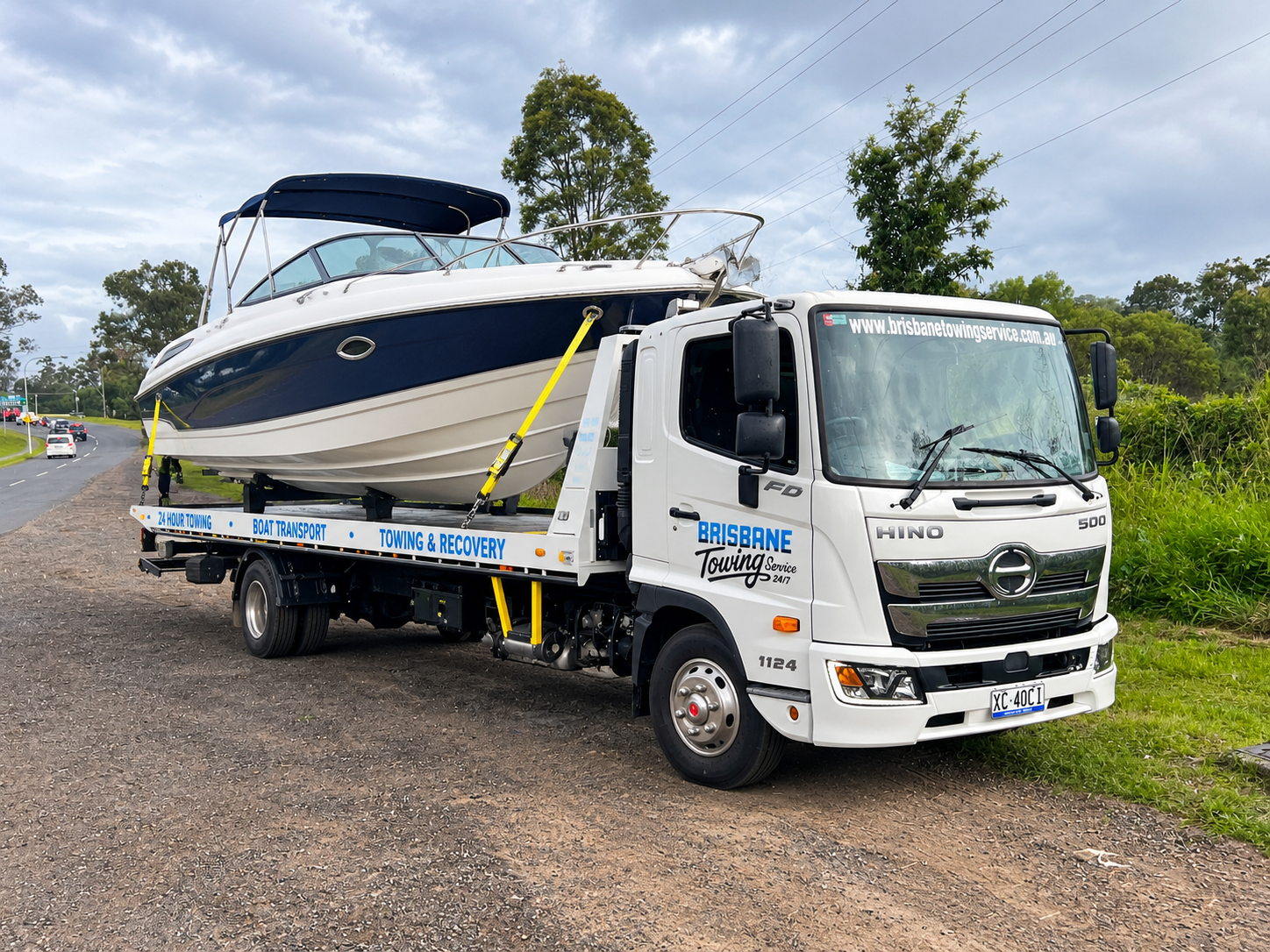
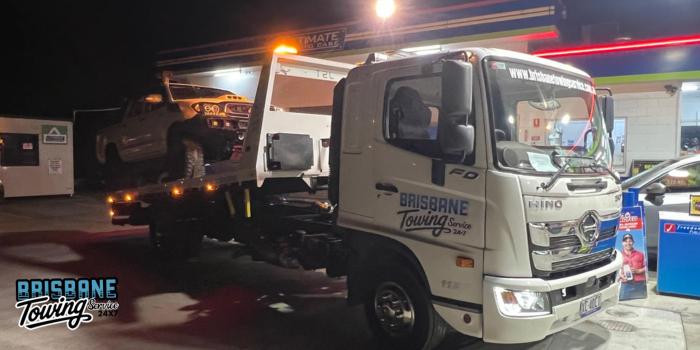
Not every towing situation calls for the same equipment, and this is where the right operator makes a genuine difference. A car stuck in a tight underground car park needs a different truck to a lowered vehicle, and a breakdown involving machinery is a different job again from a standard passenger car recovery. Brisbane Towing Service runs a range of specialist trucks, from compact tilt trays suited to tight spaces to heavy lift equipment for bigger jobs, so the right vehicle is sent for the actual situation rather than a one-size-fits-all approach that risks delays or complications on arrival.
You can find our base of operations here: Brisbane Towing Service on Google Maps.
Frequently Asked Questions
What gear do you put a car in when towing?
For flatbed towing, where all four wheels are off the road, the vehicle can generally be left in park for an automatic or in gear for a manual, since none of the wheels are turning during transport. For towing with wheels still on the ground, an automatic should be left in neutral, and a manual should also be in neutral unless it's being towed on a dolly with the drive wheels lifted clear of the road. Always check your owner's manual first, since some vehicles have specific requirements that differ from the general rule.
What driving mode is best for towing a trailer?
If your vehicle has a dedicated tow or haul mode, it's worth using whenever you're towing a loaded trailer or caravan. This setting adjusts the transmission's shift pattern to reduce unnecessary gear hunting, improves engine braking on descents, and generally puts less strain on the drivetrain compared to towing in a standard driving mode.
How often should I check my car's emergency gear?
Every three to four months is a reasonable minimum, with an extra check before storm season or any longer road trip. Tyres, batteries, and first aid supplies are usually the items most likely to have quietly degraded since the last check, so they're worth prioritising each time.
Is it safe to keep water and supplies in the car during Brisbane summer?
Bottled water is fine for shorter periods but should be rotated regularly, since prolonged heat exposure inside a parked car can affect both taste and the integrity of plastic packaging over time. It's best to avoid leaving anything genuinely heat-sensitive, such as medication, sitting in the car long term, and to rotate perishable items rather than assuming they'll last the whole season.
When a Checklist Isn't Enough
A well-stocked car and a bit of preparation genuinely does prevent a lot of roadside stress, but it's never going to cover every situation. Knowing when to stop trying to fix things yourself, and having a reliable towing service already in mind before you actually need one, is just as much a part of being prepared as anything you carry in the boot. Brisbane Towing Service operates 24 hours a day across Brisbane and the surrounding suburbs, with upfront pricing confirmed before a truck is dispatched. Call 0466 890 373 whenever you need us, or visit our Accident and Breakdown Towing page for more on how we handle these calls.