
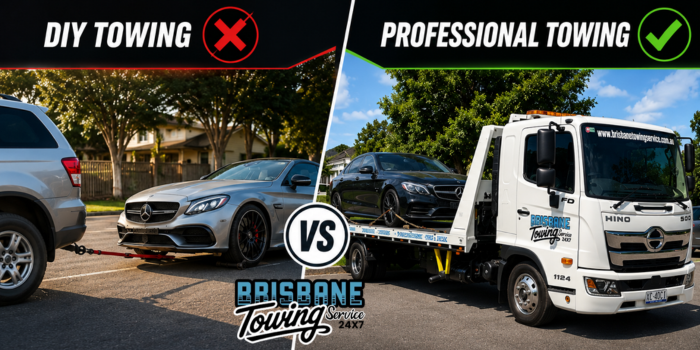
There is something every driver should understand before they attempt to move a broken down vehicle themselves. If your car gets damaged while being towed, the tow truck operator is legally required to have taken all reasonable precautions to prevent that damage and if something goes wrong, your first step is to complain directly to the towing operator in writing. This legal protection exists when you hire a licensed professional towing service. It does not exist when you attempt DIY towing with a friend, a rop because there is no operator to hold accountable, no insurance to fall back on, and no professional standard that was ever applied to the job in the first place.
The Tool Problem Nobody Talks About
One of the most underestimated realities of DIY towing is that most drivers simply do not own the right equipment and do not realise how much that matters until something goes wrong. A tow rope from a hardware store, a borrowed trailer hitch, or a set of ratchet straps repurposed from a camping trip are not towing equipment. They are improvised substitutes that were never rated, tested, or designed for the mechanical forces involved in moving a vehicle under load.
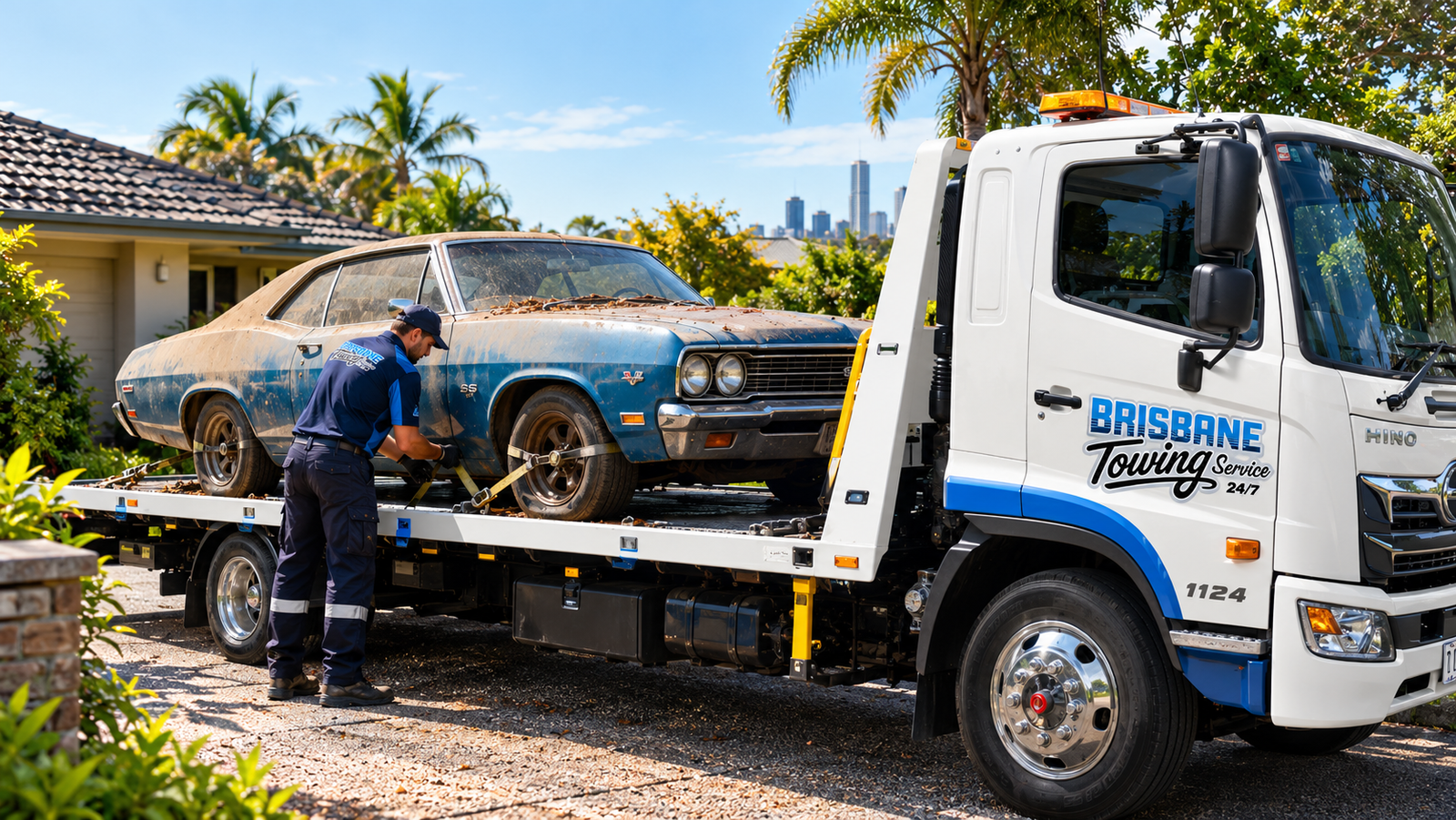
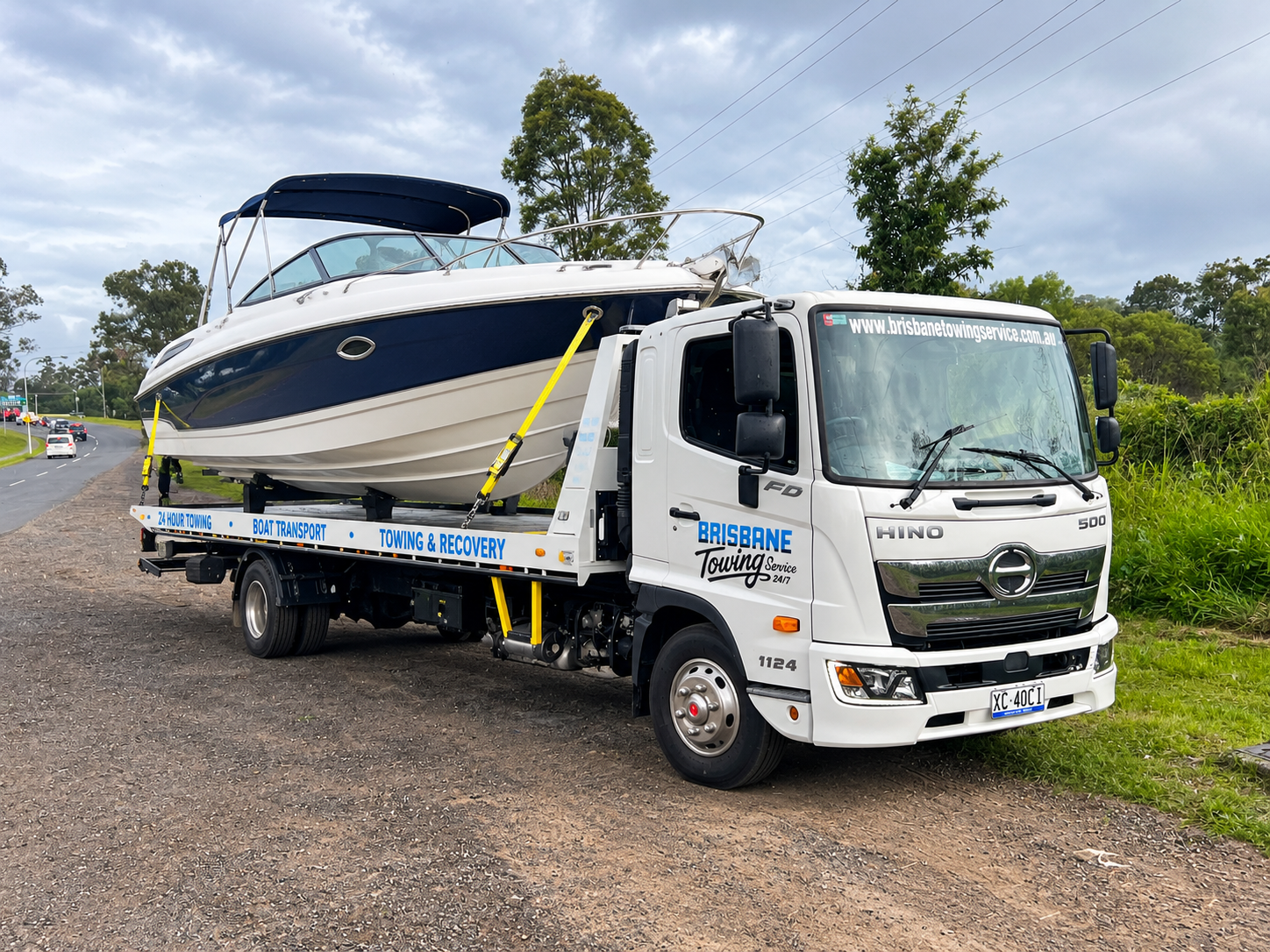
Professional towing companies invest heavily in purpose-built equipment flatbed tow trucks with low-angle ramps, hydraulic wheel lift systems, soft tie-down straps rated to specific load capacities, and winches with controlled tension management. Every piece of equipment on a professional truck has a rated capacity, a maintenance schedule, and an experienced operator who knows exactly how to use it.
DIY towing with unrated or improvised gear creates a situation where the margin between a successful tow and a catastrophic failure is razor thin. A tow rope that snaps under load on a busy road, a trailer hitch that separates on a downhill stretch, or a vehicle that rolls during loading because the ramp angle was misjudged — these are not unlikely scenarios. They happen regularly, and the damage they cause to the vehicle, to other road users, and to the driver attempting the tow is always preventable.
Not Knowing Your Location Is More Dangerous Than You Think
A breakdown does not happen in a convenient location. It happens on the Ipswich Motorway at peak hour, on a narrow back street in West End at night, or on a long stretch of highway between Pimpama and the Gold Coast where the nearest help feels very far away. DIY towing in any of these situations is not just difficult — it is genuinely dangerous, and a large part of that danger comes from unfamiliarity with the local environment.
A professional towing company operating in areas like Pimpama, Goodna, Teneriffe, and West End knows these roads. They know which streets have low overhead clearance that rules out certain truck configurations. They know which suburban roads in West End are too narrow for a standard flatbed turn. They know the fastest legal route from a breakdown point in Goodna to the nearest suitable mechanic without adding unnecessary kilometres or stress to the job.
DIY towing in an unfamiliar area adds a layer of navigational and logistical complexity that most drivers are completely unprepared for. Attempting to tow a vehicle through Teneriffe's narrow riverside streets, or managing a long distance towing situation from Pimpama back toward Brisbane without the right equipment and local knowledge, creates risk at every turn — literally and figuratively.
What DIY Towing Actually Costs You
The argument for DIY towing almost always starts with money — specifically, the assumption that doing it yourself saves money compared to calling a professional towing service. This assumption falls apart quickly when the real costs are examined honestly.
A tow rope costs between $30 and $80. A tow bar hitch adapter costs another $50 to $150. If the towing vehicle is not properly rated for the load — which most passenger cars are not — the risk of transmission damage, brake stress, and suspension wear begins the moment the load is attached. A transmission repair on a modern vehicle starts at $2,000 and can reach $6,000 or more. A damaged parking pawl from flat towing an automatic vehicle in Park costs a similar amount.
Then there is the vehicle being towed. Improper tie-down method, incorrect ramp angle, or a rope attachment point that was never designed for towing load can cause panel damage, suspension damage, and undercarriage contact that turns a simple breakdown into a significant repair bill.
A professional towing service from Pimpama to Brisbane costs a fraction of any of these repair scenarios. Long distance towing from outer suburbs like Goodna to an inner-city mechanic is affordable, transparent, and comes with the assurance that if anything does go wrong, a licensed operator with insurance and legal accountability was responsible for the job.
The Long Distance Towing Problem
DIY towing over short distances is already risky. DIY towing over long distances — the kind of long distance towing situation that happens when a vehicle breaks down far from home — is a different category of risk entirely.
Long distance towing places sustained mechanical stress on both the towing vehicle and the vehicle being towed. Heat buildup in the transmission, tyre wear from uneven load distribution, and brake fade from repeated deceleration with a heavy load behind — these are manageable risks for a professional towing company with purpose-built equipment rated for exactly this type of work. They are serious, cumulative risks for a driver attempting the same job with an ordinary passenger vehicle and improvised equipment.
A professional towing company handles long distance towing jobs with vehicles that are specifically maintained for sustained load operation. The drivers are experienced in managing load behaviour over distance — particularly on Queensland's motorway network where speed, lane changes, and gradient changes all affect how a towed vehicle behaves behind the truck. DIY towing simply cannot replicate this level of operational control, regardless of how careful the driver intends to be.
When DIY Towing Puts Other People at Risk
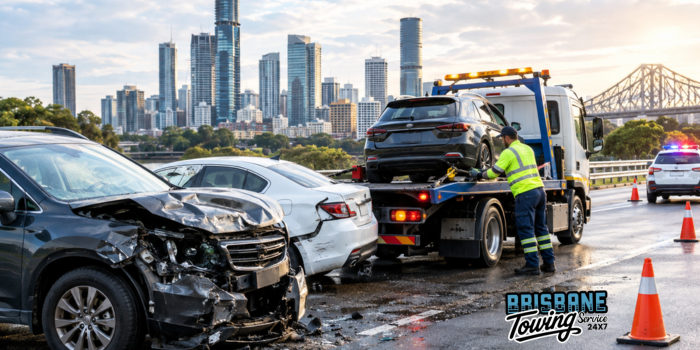
The consequences of DIY towing failure are not always limited to the driver and the vehicle. A tow rope that snaps on a busy Brisbane road becomes a hazard for every vehicle behind it. A trailer that separates from the hitch at highway speed on the M1 near Pimpama or on the Centenary Highway near Goodna is a life-threatening event for other road users — not just an inconvenience for the driver who attempted the tow.
Queensland's towing regulations exist precisely because moving a vehicle on a public road is not a casual task. The Tow Truck Act 2023 sets out clear licensing, equipment, and operational standards for towing on public roads — standards that exist because the consequences of getting it wrong extend far beyond the person making the attempt.
Calling a professional towing company is not just the safer choice for your vehicle. It is the responsible choice for every other driver sharing the road with you.
Leave It To The People Who Do This Every Day
DIY towing feels like a reasonable solution in the moment — but the gap between what it feels like and what it actually involves is where vehicles get damaged, people get hurt, and situations that started as minor breakdowns become expensive, stressful, and sometimes dangerous ordeals.
Brisbane Towing Service 24/7 operates across Pimpama, Goodna, Teneriffe, West End, and all of Southeast Queensland. Our professional towing service is available around the clock — not because breakdowns are predictable, but because they never are. We bring the right truck, the right equipment, and the right experience to every job — so your vehicle arrives at its destination in exactly the same condition it left the breakdown point.